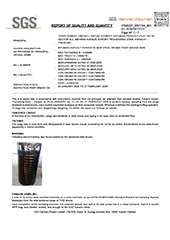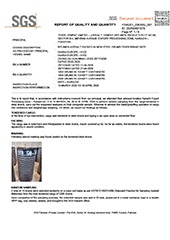


Tiger Bitumen packs bitumen into new steel drums at its facility in the Karachi Export Processing Zone and ships them in 20ft containers from Karachi Port and Port Qasim. This page sets out the drums we use, how a drum shipment is prepared and loaded, and how to judge whether drums suit your project.
Bitumen is solid or semi-solid at normal temperatures and must be heated before it can be pumped or mixed. Bulk supply handles this with heated vessels, terminals and storage tanks. Steel drum packaging handles it differently: the bitumen is filled hot, becomes solid as it cools, and stays in a closed drum until the buyer heats it for use.
That makes drums a practical choice wherever heated bulk infrastructure is missing, too far from the project, or too large for the volume needed.
Drums move bitumen through ordinary container logistics, from the loading port to sites that a heated bulk tanker cannot reach.
Drums travel in 20ft dry containers on scheduled container services, then by truck or rail to the site.
Each drum is a separate unit that can be lifted, counted and issued with suitable drum-handling equipment.
Tiger Bitumen uses two standard new steel drums. Both are 50 cm in diameter and made from 0.6 mm ST-12 steel sheet. They differ in height and net content.
180 kg drum, side elevation, drawn to scale from published dimensions.
| Item | 180 kg drum | 150 kg drum |
|---|---|---|
| Net bitumen per drum | 180 ± 3 kg | 150 ± 3 kg |
| Empty drum weight | 9.3 ± 0.2 kg | 8.3 ± 0.2 kg |
| Filled drum weight | ≈ 189.3 kg | ≈ 158.3 kg |
| Drum height | 98 cm | 83 cm |
| Drum diameter | 50 ± 0.2 cm | 50 ± 0.2 cm |
| Lid diameter | 10 ± 0.2 cm | 10 ± 0.2 cm |
| Sheet grade | ST-12 | ST-12 |
| Plate thickness, body | 0.6 mm | 0.6 mm |
| Plate thickness, top & bottom | 0.6 mm | 0.6 mm |
These details are stated in your offer or agreed with you before filling starts:
We print the buyer's required marking on new drums, for example your company name, the bitumen grade and a contract or project reference. Send the text or artwork with your order so it can be approved before filling.
Every drum order follows the same sequence. Drum size, marking, inspection and documents are agreed with you before filling begins, so nothing is decided on loading day.
Grade, quantity, drum size, marking, inspection and shipping terms are confirmed in writing.
New steel drums are made ready for filling and printed with your marking where requested.
Bitumen of the ordered grade is filled into the drums while hot and the drums are closed. The bitumen solidifies as it cools.
An agency such as SGS or Bureau Veritas samples and checks the shipment to the contract scope. You may attend.
Filled drums are loaded into 20ft containers following the loading plan agreed for your order.
Containers move to Karachi Port or Port Qasim for shipment, and the agreed documents are issued.
Drum shipments travel in 20ft dry containers. The drawing shows how drums of the published size fit inside a container of typical internal dimensions. It illustrates physical fit only and is not a loading plan.
We calculate the drum count, total net weight and number of containers for every quotation, so you can compare cost per tonne between drum sizes before you order.
Final drum quantity and metric tonnes per container must be confirmed according to the container payload, loading arrangement and shipping requirements. Container loading and export logistics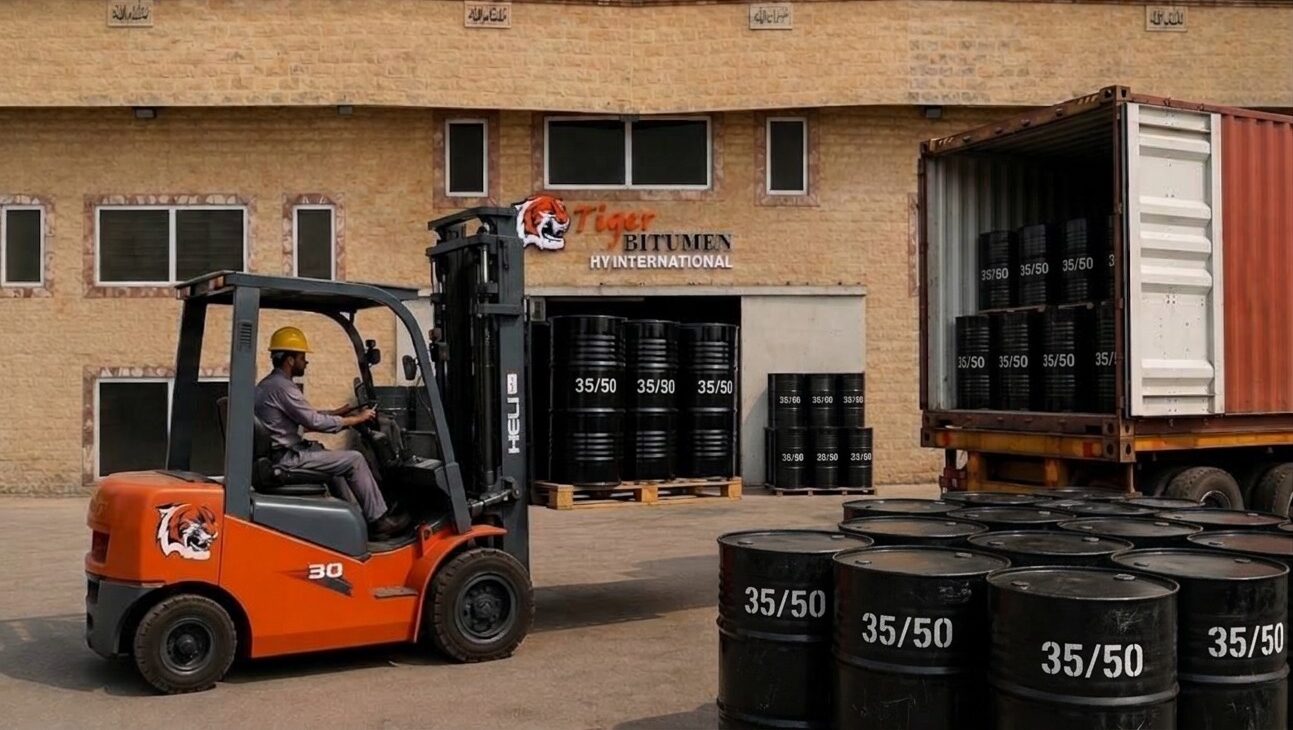
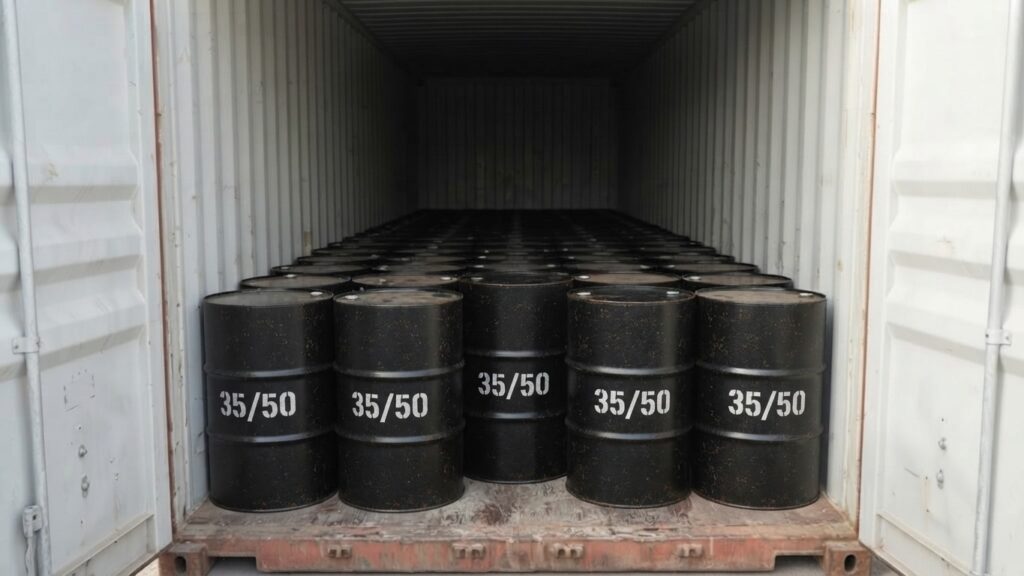
Each drum is a separate 150 kg or 180 kg unit that can be moved, counted and issued on its own.
Closed drums wait at ambient temperature until the bitumen is needed, without a heated tank.
Open and heat drums as work progresses. Unopened drums stay closed for the next section of work.
Containers of drums continue by road or rail from the discharge port to projects far from the coast.
Printed marking identifies the grade and order on every drum, which helps stock control and site issue.
Orders are planned by the container, which suits phased projects and distributors holding stock for resale.
| Factor | Steel drums | Jumbo bags (1 MT) | Bulk |
| Unit | 150 kg or 180 kg net per drum | 1,000 kg per PP woven bag in a steel cage | Vessel or tanker parcel |
| Order profile | Containerised orders for projects, distributors and phased use | Containerised orders where the site can lift 1 MT units | Large, continuous volumes near a bitumen terminal |
| Needed at destination | Container unloading, drum handling and drum heating | Forklift or crane for 1 MT units, and heating equipment | Heated discharge terminal, headted tanks and heated road tankers |
| Storage before use | Ambient, closed drums | Ambient, bags in cages | Heated tanks |
| Inland transport | Standard container haulage | Standard container haulage | Heated tankers |
| Left after use | Empty steel drums | Bags and steel cages | No packaging |
Handling 1 MT units on site? See Tiger Bitumen jumbo bags.
Not sure which format fits? Ask our export team.
SGS, Bureau Veritas or a similar agency can be appointed. Scope and cost are agreed per contract.
Buyers are welcome to visit the facility and watch their drums being loaded.
Documents are agreed in the contract to match your customs and bank requirements.
The Export Manager answers grade, packing and shipment questions on WhatsApp and email.
Need a detail not covered here? Message the Export Manager.
Yes. We print the buyer's required marking on new drums. Send the text or artwork with your order for approval before filling.
We supply penetration grades 35/50, 50/70, 60/70 and 80/100 in drums. If your specification calls for another grade, ask whether it can be drummed for your order.
Store drums upright on firm, level and drained ground, away from ignition sources, and use older stock first. Follow the safety data sheet for your grade and local regulations.
Drummed bitumen is heated to working temperature with drum heaters, drum ovens or a decanting unit, depending on your plant. Hot bitumen causes severe burns, so operators need suitable protective equipment. See the handling and storage guide.
Grade, quantity, preferred drum size, destination port, Incoterm (FOB, CFR or CIF), drum marking and any inspection requirement. A project specification helps us answer faster.
Tell us the grade, quantity and destination. We reply with drum size, drum and container count, price basis and shipment timing.